
Spheroidizing in Iron Casting: What You Need to Know
In ultramodern casting operations, performance conditions continue to rise. Factors are anticipated to repel advanced loads, repeated stress, and harsh operating conditions — without failure. This is where Spheroidizing in iron casting becomes essential. Spheroidizing is the metallurgical process that transforms graphite in cast iron from flakes into rounded nodes. This structural change dramatically improves strength, rigidity, and fatigue resistance, making it a foundation of ductile iron casting used in heavy- duty artificial operations. This companion explains what Spheroidizing is, how the Spheroidizing process works, why it matters, and how foundries measure and control it to deliver harmonious, high- quality castings.
Table of Contents
What is Spheroidizing in Iron Casting?
Spheroidizing in iron casting refers to the treatment process that modifies graphite morphology in molten iron. Rather of forming sharp, flake- suchlike graphite( as seen in slate iron), the graphite forms globular or nodular shapes. This metamorphosis is achieved through controlled chemical treatment most generally using magnesium or magnesium blends — ahead casting.
Why Graphite Shape Matters?
Graphite flakes act as stress concentrators, making the iron brittle. In discrepancy, spheroidized graphite nodules distribute stress evenly, allowing the metal to deform slightly under load instead of cracking.
This is why spheroidization is fundamental to producing ductile iron, also known as nodular cast iron.
Why Spheroidization Matters in Ductile Iron
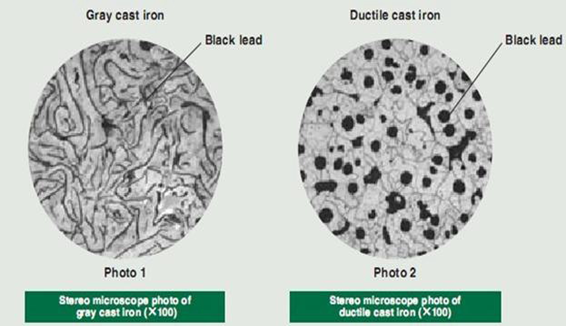
Spheroidization plays a central role in what makes ductile iron such a reliable engineering material. By transforming graphite into rounded nodules instead of flakes, spheroidization changes how the material responds to stress. This microstructural shift directly improves how the casting performs in real-world service conditions.
Key Benefits of Spheroidization
● Advanced tensile and yield strength
● Improved elongation and overall toughness
● Better resistance to fatigue failure
● More impact and shock load performance
● Reduced crack initiation and slower crack growth
Because of these properties, spheroidizing in iron casting is critical for parts similar as:
● Automotive suspension and steering components
● Heavy machinery housings
● Pipes and fittings under pressure
● Wind energy and infrastructure components
Without effective spheroidization, these components would fail prematurely under cyclic or dynamic loads.
How the Spheroidizing Process Works
The spheroidizing process must be tightly controlled to achieve harmonious graphite nodules. Below is an overview of the typical steps used in ductile iron foundries.
1. Magnesium Treatment: Magnesium is introduced into molten iron using process such as:
- Tundish cover treatment
- Sandwich system
- Cored line injection
Magnesium reacts with sulfur and oxygen in the melt, enabling graphite to solidify in spherical form.
2. Inoculation: After magnesium treatment, inoculants (usually ferrosilicon-based) are added to promote invariant graphite nucleation and prevent carbide formation.
3. Controlled Cooling: Cooling rate plays a major role in graphite shape and nodule count. Controlled solidification ensures stable spheroidized graphite formation throughout the casting.
4. Melt Chemistry Management: Precise control of carbon, silicon, sulfur, and residual magnesium situations is essential. Even small diversion can reduce spheroidization efficiency.
Factors That Influence Spheroidizing Consistency
Achieving dependable results in spheroidizing in iron casting depends on several interacting variables:
- Magnesium recovery rate – Losses during treatment
- Temperature control – Overheating can reduce the nodularity
- Sulfur content – High sulfur consumes magnesium
- Inoculation timing – Delayed pouring reduces effectiveness
- Pouring practice – Turbulence can degrade graphite shape
Well experienced foundries monitor these parameters closely to ensure consistent spheroidization across batches.
How Spheroidizing Improves Heavy-Duty Castings Durability
In industrial applications, durability means far more than just high strength. A component may test strong in the lab, but if it cannot handle repeated loading, vibration, or harsh operating conditions over time, it won’t last in the field.
What Durability Means in Industrial Use
- Resistance to fatigue failure
- Ability to absorb shock loads
- Crack resistance under cyclic stress
- Long service life in harsh surroundings
Role of Spheroidized Graphite
Spheroidizing transforms the graphite in ductile iron into rounded nodules instead of flakes. This change might seem small, but it makes a major difference in performance.
As a result, spheroidized ductile iron outperforms grey iron and many fabricated steel parts in real-world industrial conditions.
How to Improve Spheroidization Rate
Improving spheroidization is a continuous focus for high-quality ductile iron foundries.
Best Practices Include:
- Starting with low-sulfur base iron
- Carefully optimizing magnesium addition method
- Minimizing time between treatment and pouring
- Maintaining stable melt temperatures
- Applying effective late inoculation
Consistent process discipline is crucial. Even well-designed treatments can fail if execution varies.
Testing and Measuring Spheroidization
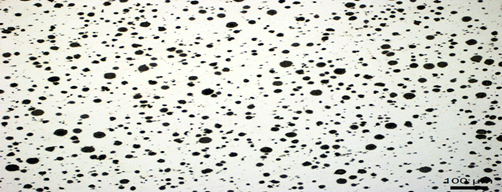
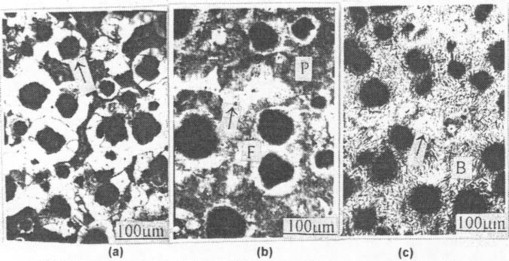
Treatment alone is not enough verification is critical. Foundries must confirm that spheroidization has been achieved before the castings move forward.
Common Evaluation Methods
- Metallographic analysis – Microscopic examination to assess graphite shape
- Nodularity percentage measurement – Determining the percentage of properly formed graphite nodule
- Mechanical testing – Checking tensile, yield, and elongation strengths
- Hardness testing – Verifying matrix structure and overall consistency
Most industry standards specify minimum nodularity levels before a casting can be classified as ductile iron. Without proper verification, even visually acceptable parts may fail to meet performance requirements.
Conclusion:
Spheroidizing in iron casting is not just a metallurgical step it’s the foundation of ductile iron performance. By converting graphite into globular nodes, the Spheroidizing process unlocks strength, durability, and continuity that ultramodern artificial operations demand.
For factors exposed to cyclic loads, pressure, or harsh surroundings, proper Spheroidization directly determines service life and trust ability.
At AKP Ferrocast, Spheroidization is precisely controlled through proven treatment styles, melt chemistry operation, and rigorous quality testing — icing ductile iron castings that perform constantly in demanding operations.
Frequently Ask Questions
How can you tell if spheroidizing is successful in a casting?
Successful Spheroidizing is verified through metallographic analysis showing globular graphite nodes and by achieving specified mechanical properties.
Is spheroidized iron better for shock or pressure applications?
Yes. Spheroidized ductile iron performs significantly better under shock, vibration, and pressure compared to flake graphite iron.
Do small foundries offer spheroidizing treatments?
Some do, but consistency depends on equipment, process control, and metallurgical expertise. Spheroidization requires tight discipline.
How long does the spheroidization process take during casting?
The treatment itself takes time, but timing between treatment, inoculation, and pouring is critical for effectiveness.
Can poor spheroidization be fixed after casting?
No. Once solidified, graphite shape cannot be corrected. Proper control during melting and treatment is essential.